Summary
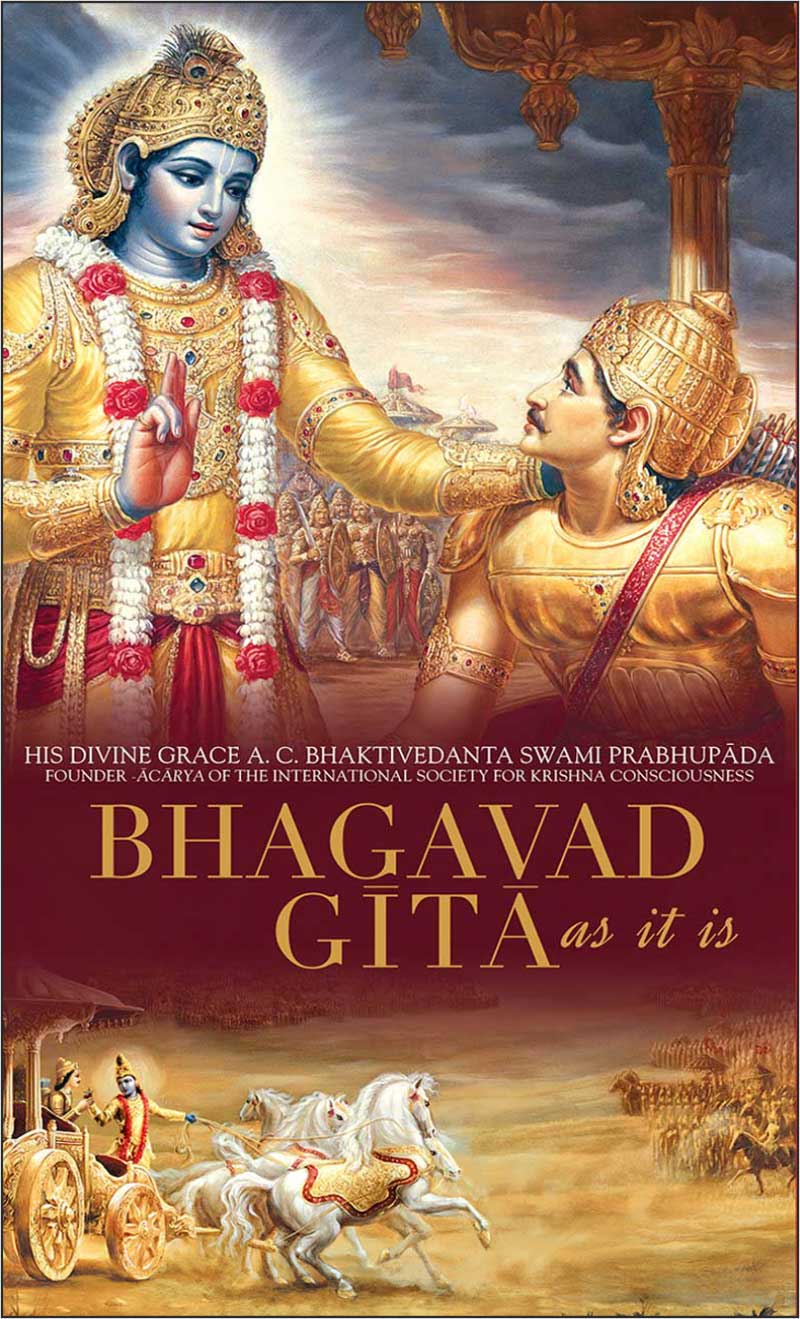
The Bhagavad Gita is a 700-verse Hindu scripture that forms part of the epic Mahabharata. Set on the battlefield of Kurukshetra, it presents a dialogue between Prince Arjuna and his charioteer Krishna, who reveals himself to be the Supreme Divine. As Arjuna faces moral confusion about fighting in a war against his own relatives, Krishna provides profound spiritual guidance that addresses fundamental questions about duty, righteousness, life, death, and the nature of reality.
The Gita is not merely a religious text but a philosophical masterpiece that offers practical wisdom for navigating life’s challenges while maintaining spiritual awareness.
Key Teachings
Dharma (Righteous Duty)
Krishna emphasizes the importance of performing one’s dharma - righteous duty according to one’s nature and position in life. He teaches that:
- One should act according to their svadharma (individual duty) rather than trying to follow another’s path
- Duty performed without attachment to results leads to spiritual growth
- Even imperfect action in line with one’s dharma is better than perfect action that goes against it
Karma Yoga (Path of Action)
One of the central teachings is the concept of Nishkama Karma - performing action without attachment to results:
“You have a right to perform your prescribed duty, but not to the fruits of action. Never consider yourself the cause of the results of your activities, and never be attached to not doing your duty.”
The Three Paths to Liberation
Krishna outlines three main spiritual paths:
- Karma Yoga - The path of selfless action
- Bhakti Yoga - The path of devotion and love
- Jnana Yoga - The path of knowledge and wisdom
The Nature of the Soul
The Gita teaches that the soul (Atman) is eternal and indestructible:
“For the soul there is neither birth nor death. It is not slain when the body is slain.”
My Thoughts
The Bhagavad Gita is one of the most profound and transformative texts I’ve ever encountered. What makes it remarkable is how it addresses timeless human dilemmas through a conversation that feels both ancient and completely relevant to modern life.
Krishna’s teachings on performing duty without attachment to results has been particularly impactful in my approach to work and relationships. The concept that we can control our actions but not their outcomes has helped me find peace in uncertainty and maintain focus on what truly matters.
The Gita’s approach to spirituality is refreshingly practical. Rather than advocating withdrawal from the world, it teaches how to live fully engaged while maintaining inner detachment and spiritual awareness.
Key insights I’ve gained:
- Detached Action - Performing duties without ego or attachment to results
- Multiple Paths - Understanding that different spiritual approaches work for different people
- Present Moment Awareness - Focusing on righteous action in the current moment
- Inner Stability - Maintaining equanimity in success and failure
These teachings have helped me navigate professional challenges, personal relationships, and life transitions with greater wisdom and composure.
Who Should Read This
This timeless scripture is valuable for:
- Anyone seeking deeper meaning and purpose in life
- People facing moral or ethical dilemmas
- Those interested in Eastern philosophy and spirituality
- Individuals looking for practical wisdom on duty and responsibility
- Anyone struggling with anxiety about outcomes and results
Favorite Verses
“You have a right to perform your prescribed duty, but not to the fruits of action. Never consider yourself the cause of the results of your activities, and never be attached to not doing your duty.” (2.47)
“A person who is not disturbed by the incessant flow of desires—that enter like rivers into the ocean, which is ever being filled but is always still—can alone achieve peace, and not the person who strives to satisfy such desires.” (2.70)
“Whatever happened, happened for the good. Whatever is happening, is happening for the good. Whatever will happen, will also happen for the good.” (Traditional interpretation)
“The mind is restless and difficult to restrain, but it is subdued by practice.” (6.35)
Conclusion
The Bhagavad Gita stands as one of humanity’s greatest spiritual and philosophical treasures. Its teachings on duty, devotion, and wisdom provide a complete framework for living a meaningful life. While rooted in ancient Indian tradition, its insights transcend cultural and religious boundaries, offering universal wisdom for anyone seeking to understand their purpose and live with greater consciousness. I give it 5/5 stars and consider it essential reading for anyone on a spiritual journey or seeking deeper understanding of life’s fundamental questions.